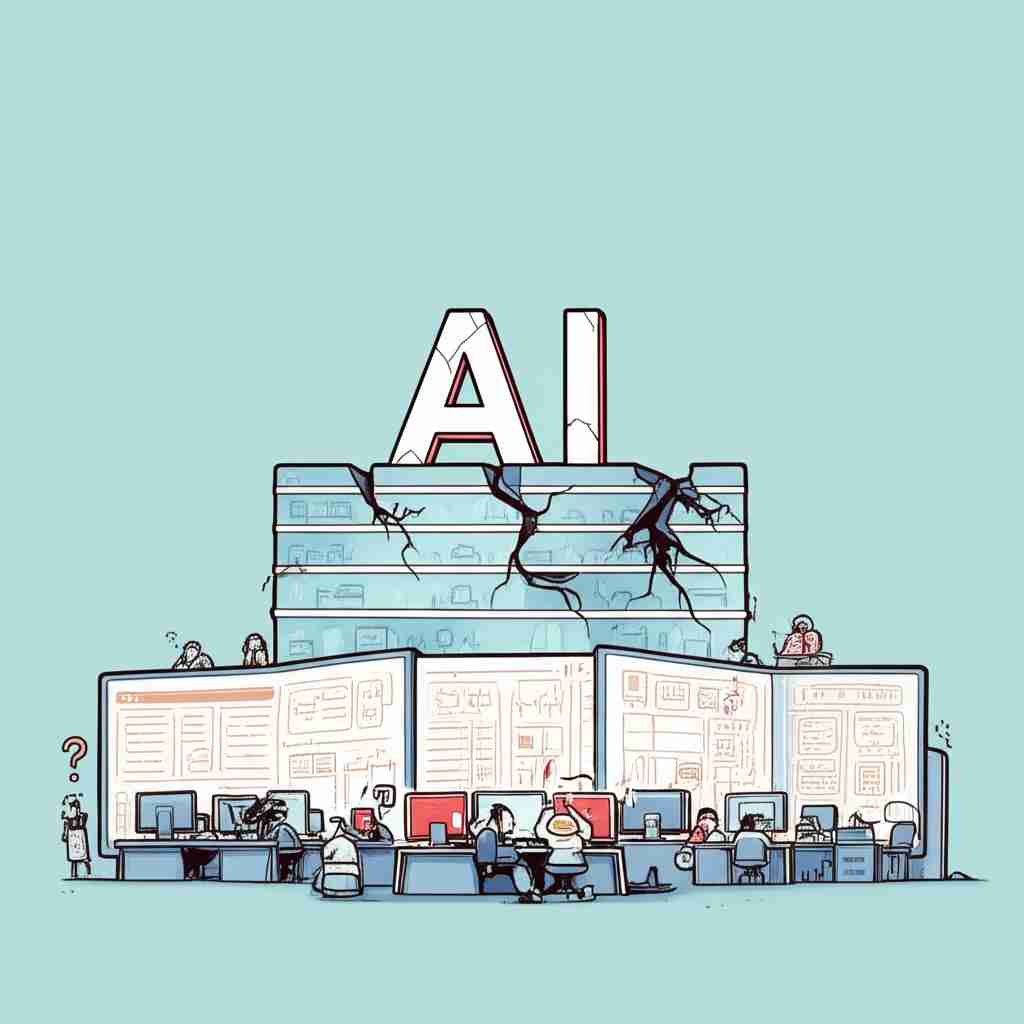

The AI Industrial Revolution Puts Middle-Class Workers Under Threat This Time
Introduction: A New Era of Opportunity—And Risk
The rise of artificial intelligence (AI) marks a transformative era in the global economy. Promising immense gains in productivity and efficiency, AI technologies are already redefining the boundaries of what machines can do. Yet, beneath the surface of record-breaking profits and impressive productivity statistics lies a growing concern: the very survival and stability of the middle class. For decades, middle-class jobs provided a stable path to financial security, social mobility, and a thriving democracy. Today, those paths face profound disruption as AI automates tasks across both blue-collar and white-collar professions. This blog post explores how the AI industrial revolution poses an unprecedented threat to middle-class workers, drawing exclusively on expert analysis and factual reporting from recent studies and major news outlets.
Big Tech’s Gains—And Middle-Class Pain
In 2024 alone, the four largest US tech companies driving AI innovation amassed a staggering $268 billion in earnings, with Amazon and Microsoft surpassing Wall Street’s expectations across the board. However, these profits have not translated into broader prosperity. Instead, they’ve coincided with waves of mass layoffs—hundreds of thousands of workers, predominantly from the middle class, lost their jobs as these companies embraced automation and cost-cutting AI tools.
- Microsoft announced layoffs of approximately 6,000 employees, even after reporting robust financial results.
- Meta, Google, and Amazon each laid off tens of thousands, citing AI-driven efficiencies as a primary reason.
- In 2023, the tech sector saw over 260,000 job cuts, with reductions accelerating into 2025.
This shift reflects a troubling new norm: record profits paired with declining workplace stability for the very people who once powered these innovations. As AI systems take over routine and complex tasks alike, the bargaining power and career security of middle-class employees diminish sharply.
Which Middle-Class Jobs Are Most Vulnerable to AI?
Unlike previous waves of automation that primarily impacted blue-collar factory work, today’s AI revolution is disrupting roles widely seen as cornerstones of the American middle class. Historically stable white-collar professions—including finance, education, law, and journalism—are now squarely in AI’s crosshairs.
- Legal Services: AI platforms can now draft contracts, analyze case law, and automate much of the work performed by legal assistants and paralegals, compelling law firms to restructure their workflows and cut traditional entry-level roles.
- Accounting: AI-driven software rapidly processes, audits, and analyzes financial data, reducing the need for human accountants—especially at junior and mid-levels.
- Journalism: Newsrooms are adopting AI tools for automatic article generation in areas like sports and finance, shrinking opportunities for entry-level reporters and editors.
- Education: AI-powered platforms such as Khan Academy now offer individualized tutoring, diminishing the demand for teachers, particularly in supplemental or remedial roles.
- Programming and Design: Tools like GitHub Copilot automate code generation, while generative image platforms enable users to create professional-grade visuals without formal training, reducing the need for junior developers and skilled graphic designers.
A 2024 McKinsey report estimated that between 15% and 30% of working hours in white-collar jobs could be automated by 2030—a figure that highlights the scale and urgency of this structural shift.
Automation, Wealth Inequality, and the Fading Middle-Class Dream
Automation’s reach isn’t restricted to technical efficiency; it’s fundamentally changing the distribution of economic benefits. As AI assumes core functions in fields like law, finance, design, and education, the pathways for upward mobility—once central to the American dream—are eroding fast. Professional roles that historically offered reliable income, benefits, and a predictable career ladder are becoming obsolete, while companies concentrate wealth among an elite that owns and operates the technology.
- Traditional entry-level jobs are vanishing, making it difficult (if not impossible) for new workers to build experience and climb the professional ladder.
- Wealth created by AI is flowing primarily to the owners of platforms, algorithms, and data—not the workers operating them.
- According to the Economic Policy Institute, from 1979 to 2022, U.S. labor productivity rose 64.6%, but average worker compensation increased only 17.3%, a gap intensified by AI-driven efficiencies.
- Federal Reserve data reveals wealth inequality at historic highs: in 2023, the richest 10% of Americans controlled 70% of the nation’s wealth, while the middle class’s share dropped from 62% in 1980 to 43%.
These changes have deep economic, social, and political ramifications. A shrinking, insecure middle class finds it increasingly challenging to invest in education, participate in civic life, raise stable families, or support local communities. The fabric of democracy and social mobility—long reliant on a thriving center—is under mounting strain.
A study conducted at The Guardian (The AI industrial revolution puts middle-class workers under threat this time) provides critical insight into these dynamics. Research published in this report found that today’s AI-driven revolution, unlike prior industrial disruptions, places middle-class, white-collar roles firmly at risk. The study underscores that AI’s ability to automate both blue-collar and traditionally ‘safe’ white-collar jobs sharply accelerates wealth disparity. Its findings reinforce that without proactive intervention, the historical engine of economic and democratic stability—the middle class—may be irreversibly weakened.
Why This Time Is Different: The Disappearance of Career Ladders
What sets today’s AI industrial revolution apart from earlier waves of automation is its capacity to eliminate the foundational steps of career progression. In the past, an individual might have started as a junior analyst or entry-level assistant, gaining skills and advancing to more senior positions over time. Yet, as companies increasingly use AI for core entry-level functions, these opportunities “to start from the bottom” are vanishing.
- Professional advancement, once based on experience and accumulated expertise, is now hampered by the disappearance of low-level jobs.
- Rapid changes in required skillsets mean that technical knowledge can become obsolete within months rather than years.
- The “learn a discipline and build a lifelong career” model is giving way to a reality in which continuous retraining is essential—but not always accessible or sufficient for all displaced workers.
Large companies, especially in finance and technology, are swiftly automating client-facing and analytical roles. For instance, Morgan Stanley and Goldman Sachs have both integrated AI tools to evaluate markets and interact with clients, further reducing entry-level positions that once offered a gateway into the middle class. As a result, both the economic ladder and the safety net for aspiring professionals are increasingly threadbare.
Navigating the Future: What Can Workers and Policymakers Do?
While the challenges posed by the AI industrial revolution are daunting, understanding the landscape is a critical first step toward adaptation and resilience. Here are some practical takeaways and strategies:
- Upskill Continuously: Workers should identify and develop skills that complement—rather than compete with—AI (for example, complex problem-solving, emotional intelligence, and interdisciplinary thinking).
- Focus on Creative, Human-Centric Roles: Careers that demand nuanced judgment, creativity, or personal interaction are less likely to be fully automated in the near term.
- Embrace Lifelong Learning: Regularly seeking new certifications, training, and cross-field knowledge will be vital as industries evolve.
- Advocate for Policy Solutions: Policymakers can consider measures such as wage protections, portable benefits, and new frameworks for worker retraining to help mitigate the transition.
- Foster Public Dialogue: Open discussions about the socioeconomic impact of AI can guide research, regulation, and investment in ways that benefit all segments of society.
Ultimately, the future of the middle class will depend on a combination of personal adaptability and collective action. The window for shaping that future is narrowing—now is the time to act.
Conclusion: The Urgency of Protecting the Middle Class in the AI Era
The AI industrial revolution is unfolding faster and with broader consequences than any previous technological shift, fundamentally redefining what it means to be in the middle class. As automation reaches into white-collar professions and erases the rungs of traditional career ladders, millions are left vulnerable to instability and downward mobility. But informed awareness and proactive adaptation—by individuals, employers, and governments—can help ensure that the benefits of AI are shared more equitably across society. The challenge is real, but with courage and innovation, the middle class can persevere and even thrive in the new world of intelligent machines.
About Us
At AI Automation Darwin, we believe AI should empower—not replace—today’s workforce. We help local businesses streamline admin and daily tasks using accessible AI tools, so teams can focus on creative, human-centric roles that stand strong in the changing economy. By making automation practical and approachable, we’re committed to supporting both business growth and the evolving landscape of work highlighted in this article.